Trezor.io/start — The Complete 2025 Guide to Securing Your Cryptocurrency
Cryptocurrency has fundamentally changed the way people think about money, ownership, and financial autonomy. Unlike traditional banking systems, crypto gives users direct control over their assets. However, this freedom comes with responsibility: if private keys are lost or stolen, there is no bank, government, or company to recover funds. Hardware wallets are one of the safest ways to protect cryptocurrency, and Trezor, a pioneer in the field, has built a strong reputation for reliability and security.
To help users set up Trezor wallets correctly, the company provides Trezor.io/start, a dedicated onboarding platform. This page guides new and experienced users through initializing their Trezor devices, generating secure recovery phrases, connecting with blockchain networks, and managing cryptocurrency safely. This guide explores everything you need to know about Trezor.io/start in detail, providing step-by-step instructions, best practices, and insights for maximizing wallet security.
1. What Is Trezor.io/start?
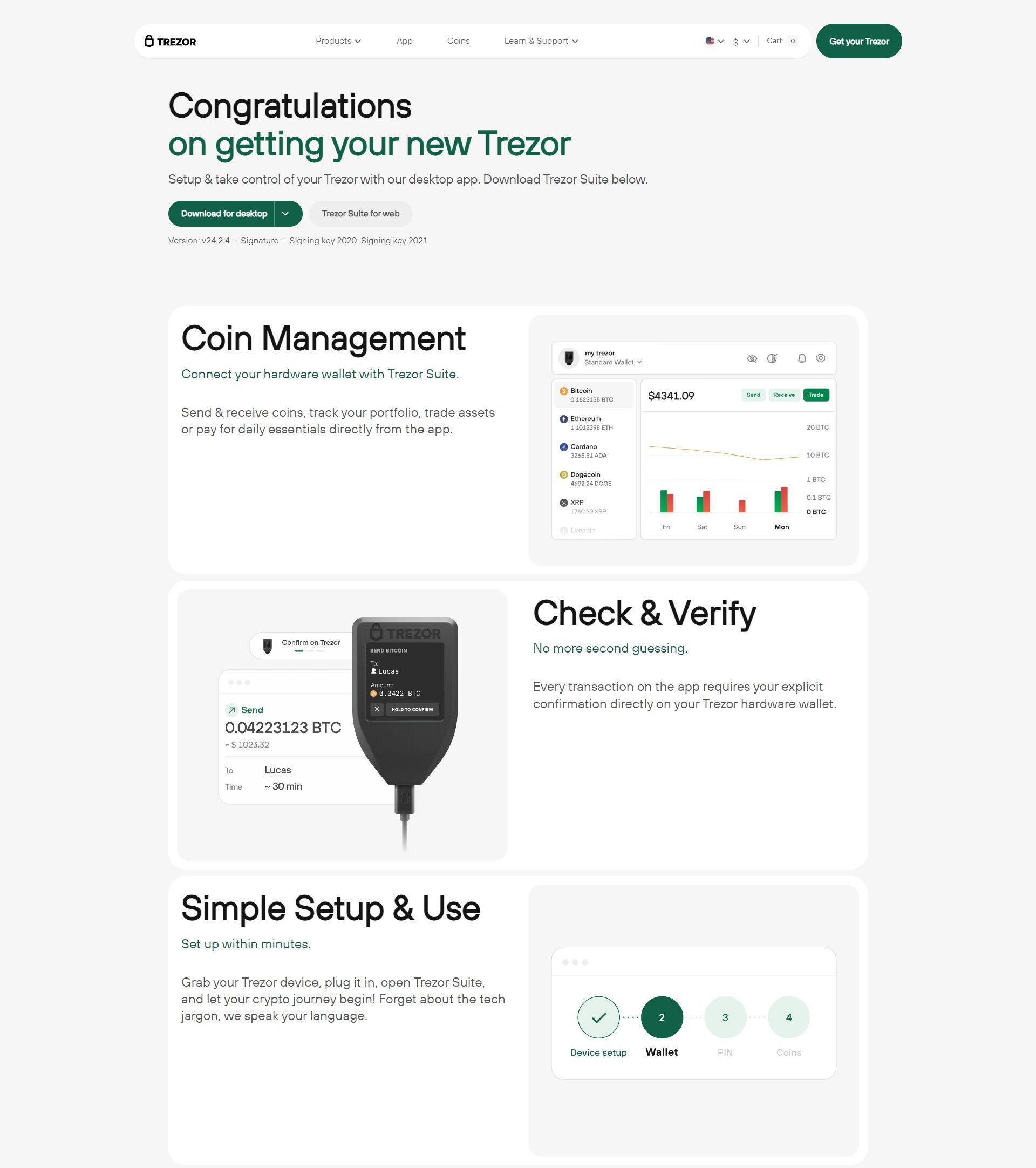
Trezor.io/start is the official online starting point for Trezor hardware wallet users. It serves as a security-first guide to:
Download the official Trezor Suite software
Set up your Trezor hardware device with a secure PIN
Generate and store a recovery seed phrase
Install apps for supported cryptocurrencies
Manage crypto assets safely
Access advanced features like staking, token swaps, and integration with Web3
Following Trezor.io/start ensures that users avoid unofficial guides, phishing attempts, and counterfeit devices that could compromise funds.
2. Understanding Trezor Hardware Wallets
Trezor hardware wallets are small, portable devices that securely store private keys offline. They serve as a bridge between the user and the blockchain while keeping sensitive information inaccessible to hackers. Key features include:
Offline Storage: Private keys never leave the device.
Transaction Verification: All transactions must be confirmed physically on the device.
Multi-Currency Support: Trezor supports hundreds of cryptocurrencies and thousands of tokens.
Recovery Seed: A 12- or 24-word seed phrase ensures funds can be restored on any compatible wallet.
Trezor devices are ideal for both beginners and advanced users who want full control of their crypto in a secure, user-friendly way.
3. Preparing Your Trezor Device
Before visiting Trezor.io/start, inspect your hardware wallet carefully:
Verify that the package is sealed and untampered.
Ensure the device is brand new without scratches or signs of prior use.
Confirm that there is no pre-generated recovery phrase — Trezor devices never ship with one.
The package typically contains:
The Trezor hardware wallet
USB cable or connector for computer/mobile device
Recovery seed cards or sheets
Instruction manuals
If any components appear missing or suspicious, contact Trezor support before proceeding.
4. Accessing Trezor.io/start Safely
Always type Trezor.io/start directly into a secure browser. Avoid using links from emails, social media, or search engine ads. This ensures you are using the official platform to download Trezor Suite, the official wallet management application.
Trezor Suite is available for:
Windows
macOS
Linux
Web browsers (via secure connection)
Using only the official Trezor Suite prevents malware and phishing attacks.
5. Installing Trezor Suite
Once downloaded, open Trezor Suite and follow the setup instructions:
Select Get Started
Choose your Trezor device model (e.g., Trezor Model One or Trezor Model T)
Follow prompts to set up the device as new or restore from an existing seed
Install firmware updates if prompted
Trezor Suite acts as your dashboard for managing cryptocurrency, viewing balances, sending and receiving funds, and interacting with supported blockchain networks.
6. Setting Up a PIN Code
During setup, Trezor devices require a PIN for security:
Choose a 4-9 digit PIN
Avoid predictable sequences like “1234” or birthdays
Enter the PIN directly on the device screen
The device will reset after three incorrect attempts, preventing unauthorized access
This PIN ensures that even if your device is lost or stolen, your funds remain secure.
7. Generating and Storing the Recovery Seed
The recovery seed is the master key to your wallet. Trezor will display either a 12-word or 24-word recovery phrase depending on the model. Steps for secure handling:
Write down each word in order on the provided recovery sheet.
Store the recovery phrase offline in a safe, secure location.
Never store the seed digitally, take photos, or upload it to cloud storage.
Never share your recovery phrase — Trezor support will never ask for it.
This seed phrase is the only way to restore your crypto if the device is lost, stolen, or damaged.
8. Confirming Your Recovery Seed
After writing the words, the device will ask you to confirm a few of them to verify accuracy. This step ensures your recovery phrase can be used for future restoration and prevents mistakes that could lock you out of your funds.
9. Firmware Updates
Firmware updates are essential for security and functionality. Trezor Suite will notify users when updates are available. Key considerations:
Always download firmware updates via Trezor.io/start or Trezor Suite.
Do not install firmware from unofficial sources.
Updating ensures compatibility with new tokens and security improvements.
10. Installing Cryptocurrency Applications
Trezor supports a wide range of cryptocurrencies. Trezor Suite allows you to interact with these assets through:
Built-in support for major coins like Bitcoin, Ethereum, and Litecoin
Integration with third-party wallets and apps for additional tokens
Web3 and decentralized finance (DeFi) interactions
Installing cryptocurrency apps enables you to send, receive, and monitor your funds securely.
11. Adding Accounts and Managing Assets
After setting up the device and installing apps:
Open Trezor Suite
Add accounts for each cryptocurrency you plan to hold
Connect the device to confirm accounts
Your dashboard will display balances, transaction history, and portfolio value. You can also label accounts for easier management.
12. Sending and Receiving Cryptocurrency
Receiving crypto:
Select Receive in Trezor Suite
Choose the correct account
Verify the address on the device screen
Share the verified address with the sender
Sending crypto:
Click Send
Enter recipient address and amount
Confirm the transaction on the device
Physical confirmation on the device prevents unauthorized transactions, even if the computer is compromised.
13. Advanced Features: Staking and DeFi Integration
Trezor supports advanced features like staking certain cryptocurrencies and integrating with DeFi applications. Benefits include:
Earning passive rewards through staking
Using decentralized exchanges securely via Trezor Suite or compatible wallets
Maintaining full control over private keys while accessing Web3 applications
Supported staking coins include Tezos (XTZ), Tron (TRX), and others, depending on network availability.
14. Security Best Practices
Even with a Trezor device, personal vigilance is crucial:
Keep your recovery seed offline in multiple secure locations
Verify every receiving address on the hardware device
Avoid entering the recovery phrase on websites or apps
Regularly update Trezor Suite and firmware
Be cautious with unknown tokens and decentralized applications
Following these practices prevents the majority of crypto security threats.
15. Lost, Stolen, or Damaged Device
If your Trezor wallet is lost, stolen, or damaged:
Obtain a new Trezor device
Use the Restore Wallet option
Enter your 12- or 24-word recovery seed
Your cryptocurrency accounts and balances will be restored safely. The recovery seed is the ultimate backup and the only necessary element to recover funds.
16. Common Mistakes to Avoid
Using unofficial or third-party apps
Sharing the recovery seed
Storing the recovery phrase digitally
Sending crypto to incompatible networks
Ignoring firmware updates
Avoiding these mistakes ensures maximum security and prevents accidental loss.
17. Trezor Support and Resources
Trezor provides extensive customer support:
Device setup guidance
Firmware and software troubleshooting
Transaction and account assistance
Remember, Trezor support will never ask for your recovery phrase. Always use official channels through Trezor.io/start or Trezor Suite.
18. Why Trezor.io/start Matters
Trezor.io/start is critical because it provides a structured, secure, and official process for onboarding new users. Following this process ensures:
The device is genuine and secure
The recovery seed is safely generated and stored
Blockchain apps are installed correctly
Assets are protected from unauthorized access
It is the first and most important step for anyone serious about securing cryptocurrency.
19. Conclusion
Trezor.io/start transforms the complex process of initializing a hardware wallet into a structured, secure, and beginner-friendly experience. By guiding users through PIN setup, recovery seed generation, firmware updates, app installation, and account management, Trezor ensures users maintain full control over their digital assets. Combined with Trezor Suite’s capabilities, staking, and DeFi integrations, Trezor provides a complete ecosystem for secure cryptocurrency management. Following the official Trezor.io/start instructions gives users confidence, autonomy, and peace of mind, embodying the core principle of cryptocurrency: financial sovereignty.